
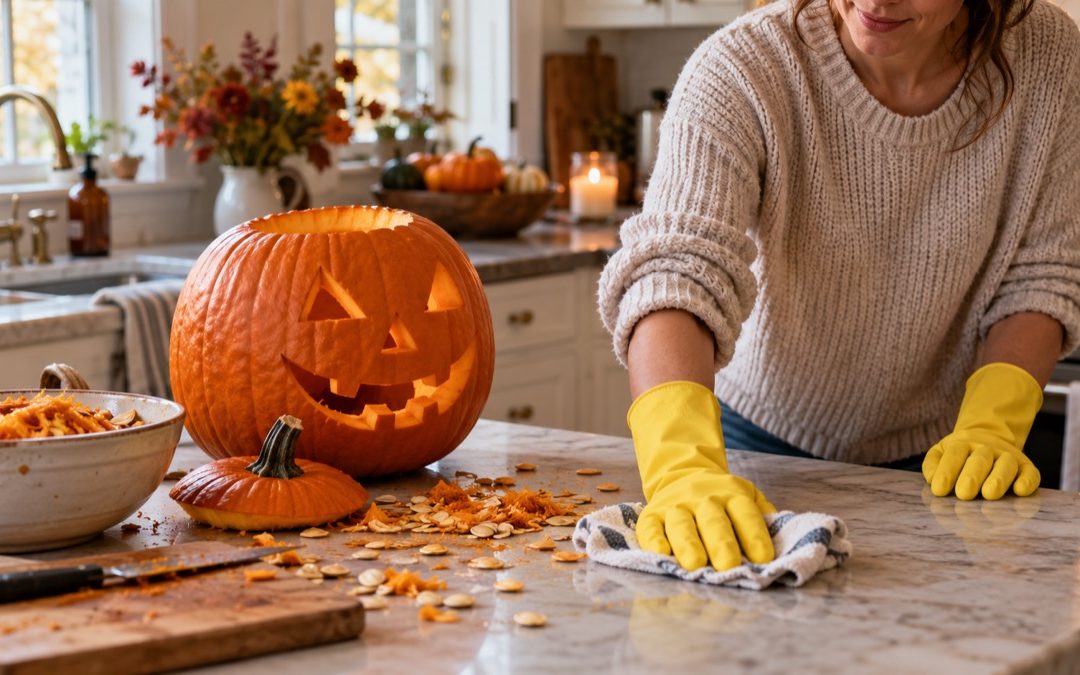
The costumes are put away, the guests have gone home, and there’s still pumpkin pulp on the kitchen counter.
Halloween is fun. Cleaning up afterward? Not always.
The good news is that you don’t have to do everything at once. Start with the mess that’s easiest to deal with while it’s fresh, then work your way through the dishes and decorations.
Here’s a practical plan for getting your home back in order.
Before the Party: Make Cleanup Easier
A little preparation can save you from a much longer clean the next morning.
Put a washable tablecloth or protective covering under the pumpkin-carving area. Keep a bowl nearby for seeds and pulp, and have a cloth ready for spills.
If you’re hosting a party, place waste and recycling bins where guests can find them. Check your local recycling guidance first, as rules for food packaging and decorations vary.
Keep your cleaning supplies together, too. A cloth, dish soap, a bin bag and a pair of reusable household cleaning gloves will cover many everyday jobs.
1. Clear Away Pumpkin Pulp and Seeds First
Pumpkin pulp is much easier to remove before it dries onto the counter.
Use a spoon or paper towel to gather the larger pieces. If you plan to keep the seeds for roasting, separate them before cleaning the rest of the area.
Then wipe the surface with a damp cloth and a little dish soap, following the care instructions for your countertop. Rinse the cloth and wipe again to remove any soap residue.
For dried-on pulp, place a damp cloth over the spot for a few minutes to loosen it before wiping. Avoid scraping delicate surfaces with a sharp tool.
Not sure what to do with the leftovers? If composting is available in your area, check which parts of the pumpkin your local service accepts.
2. Wipe Sticky Tables and Counters
Cups, sweets and party snacks can leave behind a surprising number of sticky spots.
Start by clearing the surface. Then use a damp cloth with a little mild dish soap to wipe away food and drink residue. Pay attention to table edges, handles and the spots where serving bowls were placed.
For wooden furniture or other sensitive surfaces, check the manufacturer’s cleaning instructions and test any cleaner on a small, hidden area first.
A pair of household cleaning gloves can make the job more comfortable if you’ll be washing and wiping for a while. Choose a pair that fits well and suits the cleaning products you’re using.
3. Sort the Dishes Before You Start Washing
A sink full of mixed plates, glasses and serving dishes can feel like the biggest job of the night. Sorting helps.
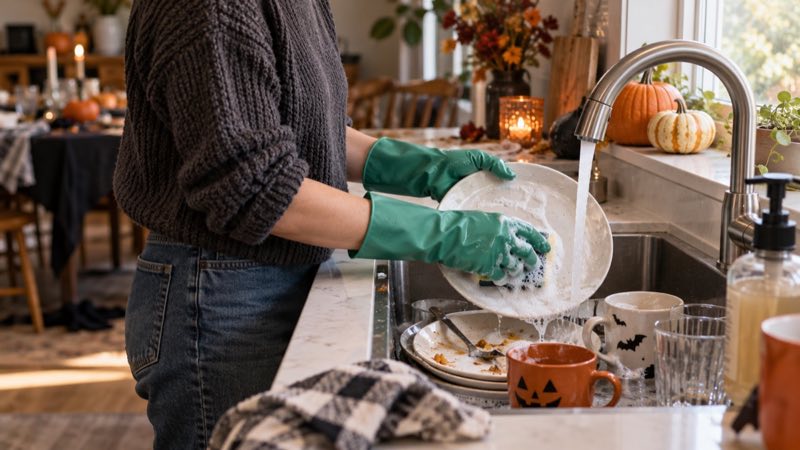
Scrape food scraps into the appropriate bin, then group similar items together. If something has dried onto a plate or serving tray, let it soak in warm, soapy water before washing.
Wash delicate glasses separately and take care with sharp utensils. Rinse and leave everything to dry, or use a clean towel if you need the counter space.
Once you’re done, rinse your reusable gloves and let them dry. If they have a lining, follow the care instructions for that particular pair.
4. Check Fabrics for Stains
Before putting tablecloths, cushion covers or costumes away, look for food, drink and makeup marks.
Follow the care label and treat stains as soon as practical. Blot the area rather than rubbing it, and test a suitable stain remover on an inconspicuous spot first.
If a stain remains after washing, check the care instructions before using a dryer: heat can make some stains harder to remove.
5. Store Decorations Only When They’re Clean and Dry
Before packing everything into a box, wipe reusable decorations where appropriate and let them dry completely.
Keep delicate items separate from heavier pieces. A small labelled box for lights, clips and other accessories can make next year’s setup easier.
For decorations made from paper, fabric or electronics, follow the relevant care instructions rather than using a wet cloth on everything.
Choosing Household Cleaning Gloves for Everyday Tasks
The right pair of gloves depends on the job and the person wearing them.
For routine household cleaning and dishwashing, buyers often compare fit, cuff length, palm texture and whether the glove has a lining. A longer cuff may be worth considering when sleeves need more coverage; a textured palm is another feature to review when handling wet dishes and cleaning tools.
Check the product specifications before choosing gloves for a particular task. Different materials and designs have different limitations, and a household glove should not automatically be assumed suitable for every cleaning chemical.
For retailers, importers and distributors, packaging and size selection matter too. The most useful starting point is a clear product brief: intended use, preferred material, sizes, packaging format and destination market.
A Few Questions About Halloween Cleanup
What’s the easiest way to clean up pumpkin pulp?
Gather the larger pieces first, then wipe the area with a damp cloth and a little mild dish soap where suitable. If the pulp has dried, let a damp cloth sit over it briefly before wiping.
Can I reuse household cleaning gloves?
Reusable gloves are designed for repeated use, but their condition should be checked regularly. Follow the product’s care instructions and replace the gloves if they become damaged or worn.
Should I use the same gloves in the kitchen and bathroom?
Keeping separate pairs for different areas is a simple way to organise your cleaning routine. Different colours or a clearly marked storage spot can help you tell them apart.
Looking for Household Cleaning Gloves?
Canton Glove offers household cleaning gloves for B2B buyers. If you’re reviewing products for a retail range or distribution programme, contact us to discuss available specifications, packaging and samples.