
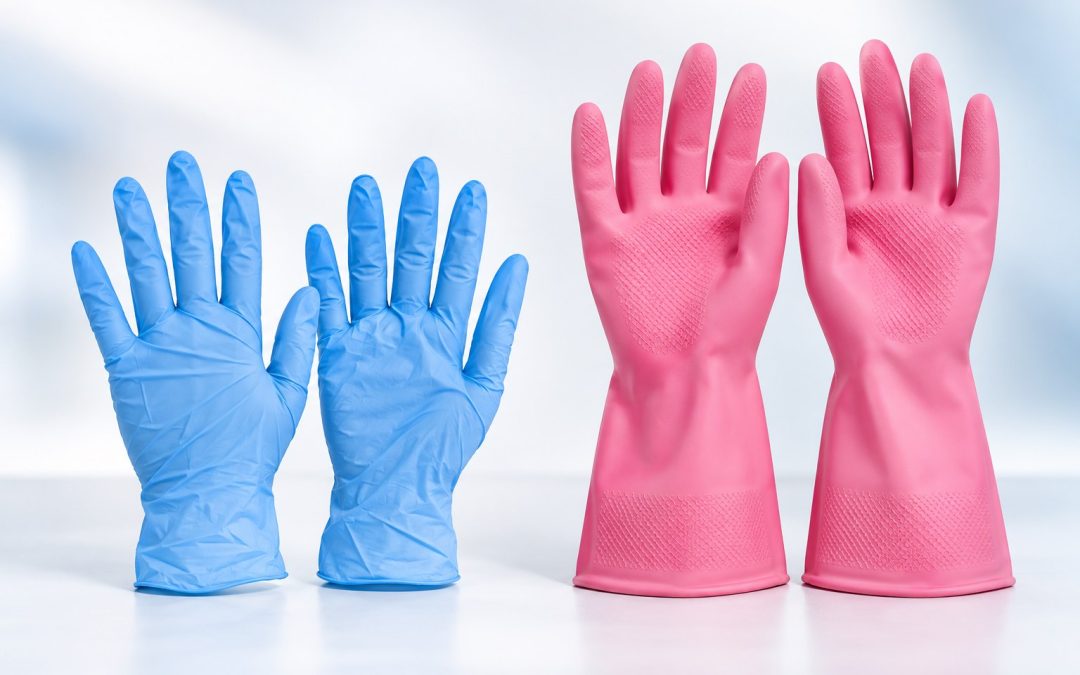
Should you use disposable gloves or reusable gloves for cleaning?
Disposable gloves are generally more suitable for short tasks, frequent glove changes and jobs requiring greater fingertip sensitivity. Reusable cleaning gloves are usually better for extended wet work, repeated contact with water and detergents, and tasks requiring longer wrist coverage.
For many cleaning companies and household glove buyers, as well as facility managers, the most effective approach is to use both types—assigning each glove according to the task, exposure time and replacement frequency.
What Is the Difference Between Disposable and Reusable Gloves?
The main differences are intended use, thickness, cuff length and replacement cycle.
Disposable gloves are designed for single use. They are lightweight, easy to replace and convenient when workers move between different tasks.
Reusable gloves are designed for longer wear and repeated cleaning work. Household gloves generally have a longer cuff and a heavier construction than standard disposable gloves.
Neither option is automatically suitable for every cleaning product or workplace hazard. Buyers should evaluate the actual task before selecting a glove.
When Should You Use Disposable Gloves?
Disposable gloves work best for short-duration cleaning tasks where convenient replacement and hand movement are important.
Typical uses include:
- Short cleaning and inspection tasks
- Handling waste or contaminated items
- Wiping frequently touched surfaces
- Changing between different work areas
- Tasks requiring fingertip sensitivity
- Situations where gloves must be replaced frequently
Nitrile gloves are a common disposable option for buyers looking for a latex-free material. Latex gloves may offer a close fit and good flexibility, although buyers should consider workplace requirements and possible latex sensitivity among users.
Disposable gloves should not be washed or reused. Replace them when they become damaged, visibly soiled or contaminated.
When Should You Use Reusable Cleaning Gloves?
Reusable cleaning gloves are generally more practical for longer cleaning jobs involving water, detergents and repeated wiping or scrubbing.
They are commonly used for:
- Household cleaning
- Bathroom and surface cleaning
- Laundry and housekeeping
- Hotel room cleaning
- Property and facility maintenance
- Janitorial work
- Repeated wet-cleaning tasks
Reusable household gloves can provide longer wrist coverage than standard disposable gloves. Textured palms or fingers may help users handle wet bottles, cleaning tools and smooth surfaces.
Flock-lined household gloves may also improve comfort during longer periods of use.
Disposable Gloves vs Reusable Gloves: Which Is Better?
The better option depends on the cleaning task.
Choose disposable gloves when:
- The task is brief
- Gloves need to be changed frequently
- Greater finger sensitivity is required
- Workers move between different cleaning areas
- Used gloves should be discarded immediately
Choose reusable cleaning gloves when:
- The task involves prolonged wet work
- Longer wrist coverage is needed
- Workers repeatedly use water or detergent
- A textured grip is important
- The glove will be inspected, cleaned and dried after use
A cleaning operation does not need to select only one type. Disposable and reusable gloves can be assigned to different tasks within the same workplace.
How to Combine Disposable and Reusable Cleaning Gloves
Use disposable gloves for short and changeable tasks
Disposable gloves make it easier to replace the hand barrier when workers change activities or move to another cleaning area.
Use reusable gloves for extended wet cleaning
Reusable household gloves are more suitable for tasks involving repeated exposure to water, longer working periods and frequent scrubbing.
Separate reusable gloves by area
Reusable cleaning gloves can be assigned by employee, department or cleaning zone. Different glove colors may help workers identify which pair belongs to each area.
Inspect gloves before use
Reusable gloves should be checked for cracks, tears, punctures, loss of elasticity, internal contamination and changes in surface condition. Damaged gloves should be replaced.
How Should Buyers Select Cleaning Gloves?
1. Identify the cleaning task
Start with the actual work rather than selecting a glove based only on material or price. Consider whether the task involves wiping, scrubbing, handling waste, prolonged wet work or frequent changes.
2. Check the expected wearing time
Disposable gloves may be more convenient for short tasks. Reusable gloves may provide better value for longer wet-cleaning jobs.
3. Evaluate cuff length
Standard disposable gloves mainly protect the hand and wrist. Reusable household gloves commonly provide longer wrist coverage.
4. Consider grip requirements
Wet containers and cleaning tools can be difficult to hold. Buyers should evaluate textured fingertips or palms using the actual tools found in the workplace.
5. Confirm sizes and comfort
Poorly fitted gloves can reduce dexterity and make cleaning tasks more difficult. Buyers should confirm available sizes, lining, flexibility and cuff design before placing a bulk order.
6. Review chemical compatibility
The terms “nitrile gloves,” “latex gloves” or “cleaning gloves” do not guarantee protection against every chemical.
OSHA recommends considering the chemical involved, its concentration and temperature, contact duration, exposure type, required glove length, grip and resistance to puncture or abrasion. Buyers should request applicable performance information for the intended task. Read OSHA glove-selection guidance.
Are Reusable Gloves More Cost-Effective?
Reusable gloves may offer better value for prolonged wet-cleaning tasks, but only when they are properly maintained and replaced when damaged.
Disposable gloves may be more efficient for short tasks and frequent glove changes.
Buyers should compare total usage costs instead of looking only at the price per pair. Important factors include the number of gloves used per shift, replacement frequency, task duration, damage rate, worker comfort, cleaning and drying requirements, and storage costs.
Questions to Ask a Glove Manufacturer
- Is this glove disposable or reusable?
- Which cleaning tasks is it designed for?
- What materials, sizes and colors are available?
- What cuff lengths are available?
- Does it have textured fingers or a textured palm?
- Is a flock-lined version available?
- What private-label packaging options are available?
- What is the MOQ for custom packaging?
- Can samples be supplied for testing?
- What quality checks are completed before shipment?
- What product specifications and test information are available?
Glove samples should be evaluated under the buyer’s actual working conditions before bulk production is approved.
Frequently Asked Questions
Can disposable gloves be washed and reused?
No. Disposable gloves are intended for single use. They should be replaced when damaged, soiled or contaminated.
Are reusable cleaning gloves suitable for every detergent?
No. Suitability depends on the glove material, detergent ingredients, concentration, temperature and contact duration. Buyers should confirm compatibility before use.
Are nitrile gloves better than latex gloves for cleaning?
Neither material is universally better. Nitrile gloves provide a latex-free option, while latex gloves can offer flexibility and a close fit. The correct choice depends on the task, exposure and workplace requirements.
How often should reusable household gloves be replaced?
Replace reusable household gloves when they develop cracks, tears, punctures, hardening, loss of elasticity or internal contamination. Gloves should be inspected before each use.
Should cleaning companies purchase both types?
In many cases, yes. Disposable gloves are useful for short and frequently changing tasks, while reusable cleaning gloves are generally better for prolonged wet-cleaning work.
Choose Cleaning Gloves Based on the Task
The decision between disposable gloves and reusable gloves should be based on the work being performed.
Disposable gloves support short tasks, easy replacement and fingertip movement. Reusable household gloves offer longer cuffs and are generally more practical for repeated wet cleaning.
Canton Glove supplies disposable nitrile gloves, disposable latex gloves and reusable household latex gloves for bulk, OEM and private-label orders. Buyers can compare sizes, colors, grip patterns, lining and packaging options before confirming production.
Contact Canton Glove to request samples, discuss packaging requirements or compare glove options for your cleaning product line.